
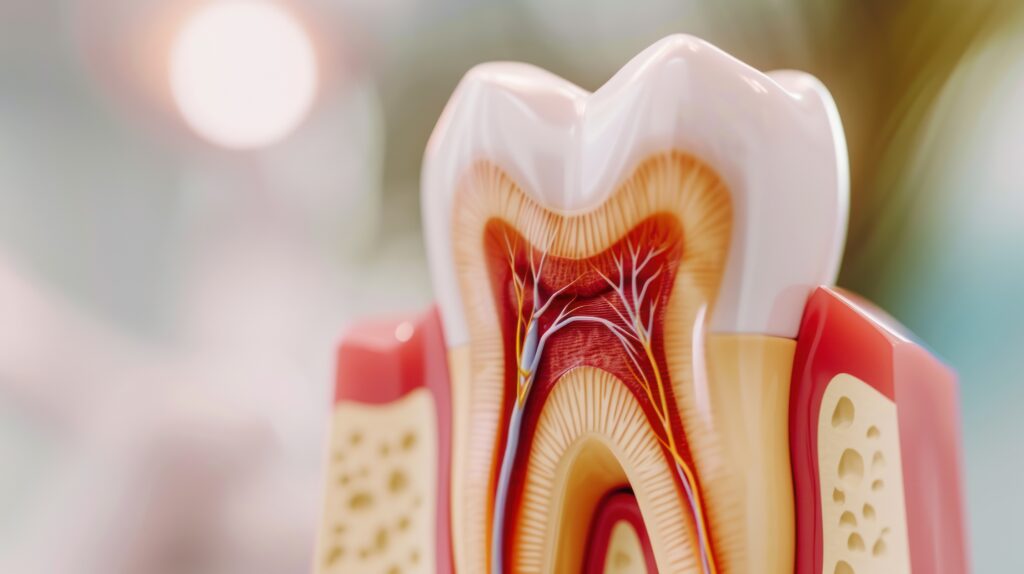
Did you know a pulpotomy could save your tooth with a simpler procedure than you might expect? Find out when dentists recommend it over a root canal.
Vital Pulp Therapy (Pulpotomy)
If a tooth is in trouble but still has life in it, vital pulp therapy may be the perfect solution. Also called a pulpotomy, this treatment removes only the damaged portion of a tooth’s inner nerve tissue while keeping the healthy part intact.
Who Is It For?
This treatment is a great option for both children and adults. It works well for deep cavities or tooth injuries where the pulp is inflamed but not completely lost.
How It Works
Think of it like cutting away a rotten spot on a piece of fruit to keep the rest fresh. We numb the area, gently remove the affected pulp tissue, clean the space, and place a protective medicated material followed by a filling or crown. We then monitor your healing with follow-up visits.
Benefits
- Relieves tooth pain quickly and effectively
- Saves your natural tooth and avoids extraction
- Less invasive than a full root canal when the pulp is still viable
- Supports healthy development in children’s growing teeth
When a Pulpotomy Is the Right Choice for Your Tooth
Not every tooth problem needs a full root canal. A pulpotomy is a gentler option that removes only the infected portion of the pulp, leaving the healthy root tissue intact. Here are the key situations where we recommend it over a root canal.
- Early-stage pulp infection: If decay has reached the pulp but the infection has not spread to the root, a pulpotomy can effectively treat the tooth.
- Reversible pulpitis: When the pulp is inflamed but still largely healthy, removing only the damaged tissue is often enough.
- Baby teeth in children: We often use pulpotomies to preserve primary teeth until they naturally fall out.
- Recent dental trauma: If a tooth has been chipped or cracked and the pulp is exposed but not fully infected, this procedure works well.
| Feature | Pulpotomy | Root Canal |
|---|---|---|
| Tissue Removed | Damaged pulp only (crown portion) | All pulp tissue including root canals |
| Invasiveness | Less invasive | More extensive procedure |
| Best Suited For | Early-stage infection or reversible pulpitis | Infection that has spread to the root |
| Common Patients | Children and adults with viable pulp | Adults with advanced pulp damage |
| Recovery Time | Generally shorter | May require longer recovery |
| Tooth Vitality Preserved | Yes, root tissue remains alive | No, all nerve tissue is removed |
A root canal becomes necessary when infection reaches the root canals or causes significant tissue damage. Your symptoms and X-rays help us determine which treatment is right for you. We always aim for the most conservative approach that still protects your long-term oral health.
Why We Offer Vital Pulp Therapy
At Brilliant Endodontics, we believe in saving as much of your natural tooth as possible. Vital Pulp Therapy, also known as a Pulpotomy, allows us to do exactly that by treating only the affected part of the tooth’s inner tissue.
This approach means you can keep your natural tooth without always needing a full root canal. It is a gentler, more conservative option that we are proud to offer our patients.
Your comfort and long-term oral health are always our priority. We provide this service because we know how much your natural teeth matter to your overall wellbeing.
What Patients Say About Vital Pulp Therapy
Patient experiences with vital pulp therapy and pulpotomy procedures are generally very positive. Most people report relief from tooth pain and appreciate having a tooth-preserving alternative to extraction.
Patients frequently highlight how straightforward the procedure feels compared to their expectations. Many express satisfaction with how quickly discomfort resolves following treatment.
If you are considering vital pulp therapy, speaking directly with your dentist about what to expect can help ease any concerns before your appointment.
Read our reviewsFrequently Asked Questions About Vital Pulp Therapy
What is a pulpotomy and how is it different from a root canal?
A pulpotomy removes only the damaged portion of your tooth’s inner nerve tissue while keeping the healthy part intact. A root canal removes all pulp tissue including what is inside the root canals. At Brilliant Endodontics, we always aim for the most conservative approach, and a pulpotomy is a less invasive option when your pulp is still viable. For more information on saving natural teeth, the American Association of Endodontists offers a helpful patient resource.
Who is a good candidate for vital pulp therapy?
Vital pulp therapy works well for both children and adults. You may be a good candidate if you have a deep cavity, a recent tooth injury, reversible pulpitis, or early-stage pulp infection that has not yet spread to the root.
Can a pulpotomy be used to treat a child’s baby tooth?
Yes, we frequently use pulpotomies to preserve primary teeth in children until they naturally fall out. This treatment also supports healthy development in growing teeth, making it a great option for younger patients.
What are the benefits of choosing a pulpotomy over extraction?
A pulpotomy relieves tooth pain quickly, saves your natural tooth, and is less invasive than a full root canal. At Brilliant Endodontics, we believe preserving your natural teeth is important for your overall wellbeing.
What happens during a pulpotomy procedure?
We numb the area, gently remove the affected pulp tissue, clean the space, and place a protective medicated material followed by a filling or crown. We then monitor your healing through follow-up visits to make sure everything is progressing well. If you have questions about endodontic treatment, our team is happy to help.
Schedule Your Appointment Today
At Brilliant Endodontics, we are here to help you explore whether a pulpotomy is the right solution for your tooth. If you’re ready to take the next step, call us or schedule your appointment online to receive expert guidance tailored to your unique situation.